















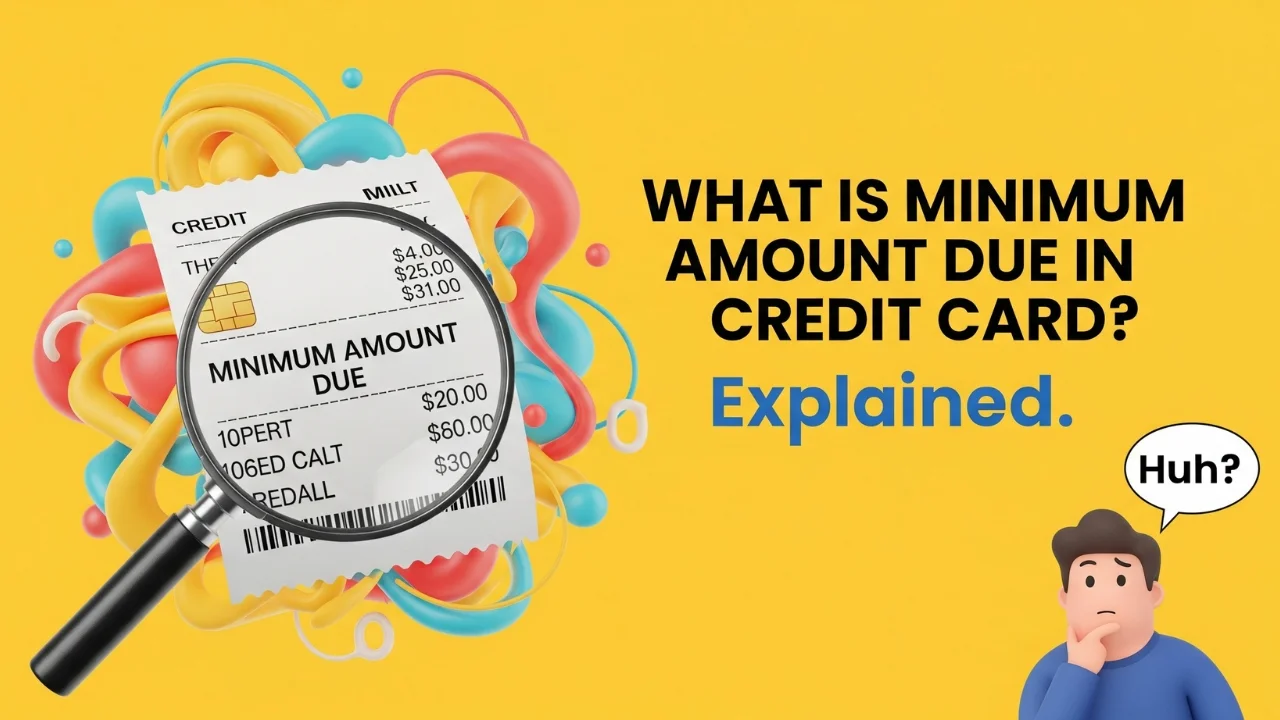
The minimum amount due term is vital for individuals to use credit cards to make purchases, as often the minimum amount owing will help in maintaining a good credit score and avoiding debt traps.
Maintaining a credit profile is essential, particularly for individuals who frequently require loans for various purposes, such as education fees, household expenses, and other expenses. Their credit card is handy for them, but maintaining efficient credit card usage and paying the minimum amount due is essential.
What Is the Minimum Amount Due In Credit Card?
A minimum amount due refers to the amount that must be repaid by the due date of the borrower’s total credit card bill, ensuring the borrower’s repayment ability, ensuring the borrower’s credit card account remains in good standing, helps avoid late payment charges, and preventing a decrease in credit score.
However, it is essential to note that their interest will be applied to the remaining balance of the total credit card bill. the Minimum Amount Due in Credit Card.
How is the minimum amount due calculated?
The central part of the minimum amount due is the bill made by the borrower’s credit card at the current time, and it usually accounts for 5% of the total amount due to be repaid.
If there is any unpaid minimum amount due from a previous period, it will also be included, along with late payment charges.
Guide : Credit Card Loan Vs Personal Loan – Best Choice?
Comparison of Minimum Amount Due & Full Payment
| Basis | Minimum Amount Due | Full Payment |
| Amount Paid | Small Part of Total Bill (Usually 5%) | 100% of the Credit Card Bill |
| Interest Charged on Remaining | Yes, on the Unpaid Balance | No |
| Debt Accumulation | High Risk | No |
| Credit Score | Slightly Negative (Long Term) | Positive |
| Financial Discipline | Low | High |
| Ideal For | Temporary Financial Crunch | Regular, Disciplined Card Users |
Recommend : Axis Bank Credit Card Apply Online
Eligibility Criteria For Minimum Amount Due in Credit Card
✅ Age: 21 Year to 65 Year Old
✅ Income: Minimum Monthly Income ₹15,000 – ₹30,000
✅ Credit Score: Prefer 700 or Above
✅ Nationality: Indian Resident
✅ Employment Type: Salaried Person or Self-Employed
Document Needed For Minimum Amount Due in Credit Card
- Identity Proof: Aadhaar Card, PAN Card
- Address Proof: Aadhaar Card, Utility Bills, Passport
- Income Proof: salary slips of last 3 months (Salaried Person) / ITR (Last 2 Years), Business Proof (Self-Employed)
- Photographs: 2 to 3 Passport-size recent photos
Conclusion
Minimum Amount Due is a beneficial option for everyone who deals with loans or debt because not paying a loan or being late in payment will negatively impact an individual’s credit profile even if they were genuinely in some circumstance not to pay. They had a very good credit profile before, and that minimum amount due gave individuals a chance to pay only the least amount and prevent their credit score or profile from decreasing.
But making a habit of paying only the minimum amount due will eventually affect an individual’s credit score and profile in the long run.
Frequently Asked Questions
What happens if the borrower does not pay the minimum amount due or not at the time?
Failing to pay the minimum amount due on time will result in additional late charges and interest and also negatively impact the borrower’s credit score. If this continues, it may lead to legal notices and card suspension.
Only paying the minimum amount due will be okay?
Paying the minimum amount due will cause trouble in the long term. This payment is only made if the borrower is unable to pay the full amount due to some problems; by paying only the minimum amount, it will help prevent damage to the borrower’s credit history and credit score for the time.
However, if the borrower only pays the minimum amount due without reason, it will prevent any extra charges; however, interest will still be applied to the remaining due amount, which will accumulate. Ultimately, the borrower will need to pay more than the original bill amount.